
Christmas in El Born: Fairs, Lights and the Three Kings
Christmas in Barcelona does not end on 25 December. In Catalonia the season runs to 6 January, when the Three Kings bring the presents, and the fortnight around it is the most programmed of the year: two historic street fairs, a city-wide lights route, a free New Year's Eve show on the avenue below Montjuïc, and a parade on 5 January that is the real peak. Because it is built on recurring civic events, the essentials are known well in advance.
El Born sits inside most of it. The Cathedral fair is ten minutes on foot, the port fair is fifteen, the Palau de la Música and Santa Maria del Mar are on the neighbourhood's own doorstep, and the city's New Year show is a short metro ride away. Below is how the season is put together, what each fair sells, what 5 January actually involves, and the December–January programme that happens inside or five minutes from El Born.
How the season actually works
The single most useful thing to know is that Christmas ends on 6 January, not on 25 December. Christmas Day is family day and the city is quiet; the night that matters is 5 January, when the Three Kings arrive and children receive their presents on the night of 5–6 January rather than from Santa. That is the season's peak, and it is why a visitor's plan is better built around the first week of January than around Christmas week.
The civic side runs to fixed dates each year. The fairs open at the end of November or in December, the lights stay on through the season, and the Kings arrive on 5 January every year without exception. What changes is the programme attached to those fixed points: concert dates, workshop days and each edition's exact times.
The City publishes the current edition on its season hub, barcelona.cat/nadal. Because the edition rotates, treat the recurring rules on this page as your plan and check that hub for this year's timetable, opening times and any last-minute changes.
Fira de Santa Llúcia — the Cathedral fair
The Fira de Santa Llúcia is Barcelona's Christmas fair, held in front of the Cathedral since 1786 and timed around the feast of Santa Llúcia on 13 December. More than 200 stalls fill the pla de la Seu and the Avinguda de la Catedral — the square and the avenue beside the Cathedral, about ten minutes on foot from Passeig del Born through the Gothic Quarter.
The practical window is stable: stalls are put up at the end of November or the beginning of December, always before the 13th, and stay until Christmas. If you are in the city for the last week of November or the first half of December, the fair is already running.
It is not only figurines. The stalls are grouped into four sectors, and each is worth a slow walk:
| Sector | What you find there |
|---|---|
| Nativity scenes and figures | Pessebre scenes and individual figures from the pessebristes — the specialist modellers |
| Greenery and plants | Natural and artificial trees, moss, eucalyptus — and the tió logs children "beat" for sweets |
| Crafts | Clothes, jewellery, decorations and gifts |
| Music | Simbombes (a friction drum, the market's signature sound), tambourines and traditional instruments |
The fair has its own small programme alongside the stalls: nativity-scene short courses run by the Associació de Pessebristes de Barcelona, a giant tió log, the Carassa de Nadal parade, and traditional dancing and music. This is the market locals use to buy their pessebre figures and their tió, so go early if you want the widest choice.
Fira de Reis on the Gran Via
The second fair is the Fira de Reis, also called the Fira de Sant Tomàs i Reis. It runs on the Gran Via de les Corts Catalanes from the end of December to Kings' Day on 6 January, with stalls between Carrer de Muntaner and Carrer de Calàbria. Its origins date back to 1877, and its start is approximated to Sant Tomàs, 21 December.
It is run by stallholder and craft associations together with the city's guilds — the toy sellers, the xurro sellers and the artisans — and it sells costume jewellery, decorations, clothes, ceramics, sweets, toys and gifts. Chocolate and xurros are made at the market itself, which is half the point of going.
The fair's last night is the one to remember: after the parade on 5 January, families walk the Gran Via to buy the final presents before the Kings are believed to arrive. A small note on addresses: the City's own activity listing gives the fair's stretch as between Rocafort and Muntaner, while the Cultura Popular page that records the fair's history gives Muntaner–Calàbria. They describe the same avenue, and the stalls move with the edition — so use the Cultura Popular form as the fair's own address and check the City listing for the current year's stretch.
The Cavalcada de Reis, 5 January
On 5 January, Caspar, Melchior and Balthazar come to Barcelona, and their parade — the Cavalcada de Reis — fills the streets of the centre. It is the city's biggest recurring Christmas event and it is free: you stand on the pavement and watch. Catalan speakers say Reis; Cabalgata is the Spanish word for the same parade.
The detail to plan around is that the City publishes the route and the times in late December, edition by edition. In the last published edition the parade set off from 6.00 pm, with the route confirmed on the day itself; expect the 2027 route to be announced the same way, so check the City's Three Kings page in the final week of December rather than relying on a route copied from a previous year.
Two practical points. The centre's main arteries close to traffic for the evening, so the metro — not a taxi — is the reliable way to reach and leave the route. And rather than chasing the whole procession, pick one stretch of the route and settle there; the parade passes, it does not stop.
Lights and New Year's Eve
The city's Christmas lights come on for the season and follow a fixed timetable: Sunday to Thursday, 5.30 pm to 1.00 am, and until 2.00 am on Fridays, Saturdays and the eve of public holidays (25 and 31 December, and 5 January). The route is not a single street — it takes in designer installations, lit fountains in every district, the lit façades of the municipal markets, and monuments and unique buildings picked out in light.
For New Year's Eve the City stages a free show on Avinguda de la Reina Maria Cristina, the avenue below Montjuïc, running from 11.50 pm to 12.10 am with fireworks and music. There is no ticket and, in the last edition, no capacity restriction — you turn up. One caution: you will see guides place Barcelona's New Year's Eve at Plaça de Catalunya. The official location is the Reina Maria Cristina avenue; if a page tells you otherwise, it is out of date.
What's on in and around El Born
This is the part a generic Spain holiday card never gives you. El Born's own Christmas is not a street market — it is a museum programme, a run of concerts, and a fair on the waterfront.
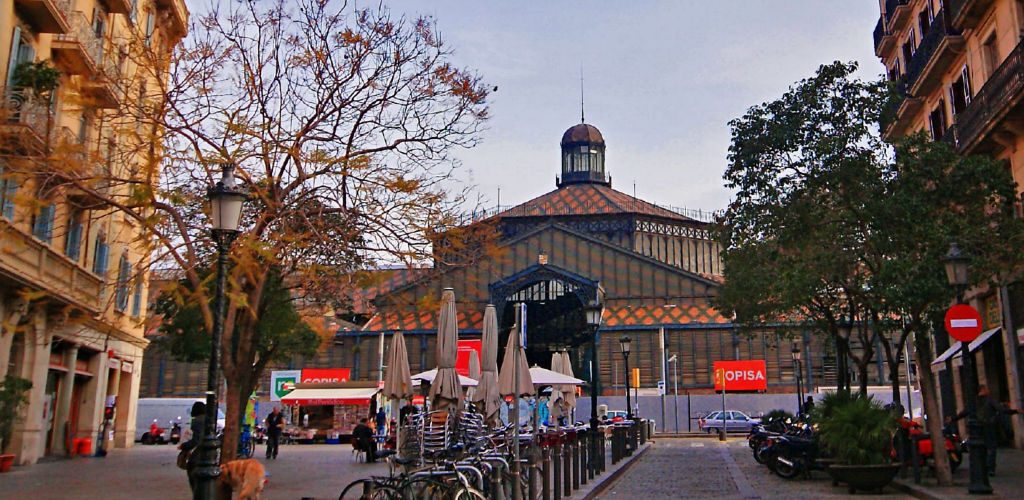
El Born Centre de Cultura i Memòria (the old Born Market) runs Christmas visits, children's workshops billed as Bornautes for ages 6–12, and the activity La ciutat de la xocolata on the social role chocolate once played in old Barcelona. It is the neighbourhood's own family offer and it sits under the market's iron roof on Plaça Comercial.
Basílica de Santa Maria del Mar hosts December concerts, and the Palau de la Música Catalana — five minutes up Carrer de Sant Pere Més Alt from Passeig del Born — runs its Nadal al Palau series of seasonal concerts. Smaller and easy to miss: a Bach organ cycle at the Oratori de Sant Felip Neri, a chapel tucked into a square a couple of blocks from the Cathedral.
On the water side, a Christmas fair, the Fira "Nadal al Moll de la Fusta", is held at the Moll de la Fusta, about fifteen minutes' walk from El Born. And the Barnatresc Christmas walk, Nadal Solidari, starts and finishes in Parc de la Ciutadella. Exact dates for these shift each edition — the current ones are on the City's Ciutat Vella activity listing, alongside the free "Sounds of Christmas" concerts staged in every district.
| Walk to it from El Born | Worth the trip across town |
|---|---|
| Palau de la Música Catalana — Nadal al Palau series (5 min) | Cavalcada de Reis, 5 January — city centre, reach it by metro |
| Basílica de Santa Maria del Mar — December concerts (5 min) | New Year's Eve show on Avinguda de la Reina Maria Cristina |
| El Born CCM — Christmas visits and children's workshops | Fira de Reis on the Gran Via (end of December to 6 January) |
| Oratori de Sant Felip Neri — Bach organ cycle | — |
| Moll de la Fusta — Christmas fair (15 min) | — |
| Parc de la Ciutadella — Barnatresc Christmas walk | — |
| Fira de Santa Llúcia at the Cathedral (10 min) | — |
Practical winter notes
The Mercat del Born closes every Monday unless it is a public holiday, and closes all day on 25 December and 1 January; on 26 December, the day after Christmas, it shuts early at 2.30 pm. El Born CCM keeps its own holiday opening hours and publishes them separately. Check both before you set out.
Metro, buses and the airport link run on 25 December and 1 January, but on holiday timetables — build in extra time. Outside Christmas week itself, December and early January are the neighbourhood's quietest and cheapest stretch: restaurants and bars stay open, the crowds are thin, and hotel rates are at their lowest. Christmas week is the exception.
See also our guides to Mercat del Born opening hours, things to do in El Born, what to do in El Born with children, eating and drinking after dark, the best time to visit El Born and the complete El Born guide. Getting here: how to get to El Born.
Frequently asked questions
Is there a Christmas market in El Born itself?
Not an official one. No Christmas market is held in the streets of El Born proper — there is nothing official for Passeig del Born or the square in front of Santa Maria del Mar. The neighbourhood's Christmas is its museum programme, its concerts and the port-side fair at Moll de la Fusta. The two big city fairs, Santa Llúcia at the Cathedral and the Fira de Reis on the Gran Via, are a short walk and a metro ride away.
When is the Three Kings parade in Barcelona?
Every year on 5 January. The Cavalcada de Reis fills the streets of the centre; the City publishes the route and times in late December. Check the City's Three Kings page in the final week of December for the current edition rather than trusting a route from a previous year.
Do I need tickets?
No for the lights, the two fairs, the Cavalcada de Reis parade and the New Year's Eve show, which has been free with no capacity restriction. Concerts, museum workshops and some guided Christmas visits are separate — check the venue or the City's district listing, as some are ticketed or restricted.
Is everything closed on 25 December and 1 January?
Both are public holidays and many museums and markets shut or run holiday hours — the Mercat del Born closes all day on both. Restaurants and bars in El Born largely stay open, but confirm individual hours. Public transport runs on holiday timetables.
What should I buy at the Fira de Santa Llúcia?
Pessebre nativity figures, greenery, a tió log for the children, and a simbomba from the fair's music stalls. It is where locals buy their Christmas decorations and figures, so the choice is widest early in the fair.
Is it worth visiting between Christmas and Three Kings?
Yes. Once the Christmas Day family gatherings are over, the city is quieter while both fairs are still open, the lights are on and the concerts are running — and everything builds to the parade on 5 January. It is the least crowded and, outside Christmas week, the cheapest stretch of the winter.
Key facts at a glance
| Event | Where | When it recurs | Cost | Walk from El Born |
|---|---|---|---|---|
| Fira de Santa Llúcia | Pla de la Seu and Avinguda de la Catedral | End of November to Christmas; timed to 13 December. Held since 1786 | Free to browse | 10 min |
| Fira de Reis (Sant Tomàs i Reis) | Gran Via de les Corts Catalanes, Muntaner–Calàbria | End of December to 6 January; from around 21 December. Origins 1877 | Free to browse | Metro or 25 min walk |
| Cavalcada de Reis | Streets of central Barcelona | Every 5 January; route published in late December | Free | Reach by metro |
| Christmas lights | City-wide route | Sun–Thu 5.30 pm–1.00 am; to 2.00 am Fri, Sat and eves of 25 & 31 Dec and 5 Jan | Free | On the doorstep |
| New Year's Eve show | Avinguda de la Reina Maria Cristina | 31 December, 11.50 pm–12.10 am | Free, no capacity restriction | Reach by metro |
| El Born CCM programme | Plaça Comercial, El Born | Christmas visits and Bornautes workshops each December–January | Visit free; some workshops ticketed | 5 min |
Official sources: Fira de Santa Llúcia, Fira de Reis per Sant Tomàs, the Three Kings in Barcelona, Barcelona gets lit, New Year's Eve and the Ciutat Vella Christmas listing (all Ajuntament de Barcelona).