
Festes de Santa Eulàlia: Barcelona's Winter Festival
The Festes de Santa Eulàlia — almost always called La Laia — is Barcelona's festa major d'hivern, the city's winter festival, built around 12 February, the feast of its patron saint. For a few days either side of that date the old city fills with giants, fire and castells: the seguici of the city's figures, the procession of the Laies, a diada castellera, the correfoc and a big ballada de sardanes. Where La Mercè fills September with stadium concerts and huge crowds, La Laia is smaller, older-feeling, family-scale and mostly free, and it happens on foot in Ciutat Vella.
Two of its best moments sit inside the neighbourhood: the Bestiari and the children's giants are exhibited at El Born CCM, and the Àliga de la Ciutat procession closes inside Santa Maria del Mar, a few minutes' walk from the Passeig del Born. This guide explains what La Laia is, when it falls, the set pieces worth planning around, and which parts you can see without leaving El Born.
What La Laia is
Santa Eulàlia has been Barcelona's patron saint since the end of the 17th century. The legend tells of a thirteen-year-old girl, Eulàlia, from a house in Sarrià, who in the 4th century confronted the Roman consul Dacià during the persecutions and was put to death for her faith. In the city's telling she was imprisoned and punished but never renounced her beliefs, and she became a symbol of solidarity and the defence of justice. Barcelona has honoured her ever since, and in February it does so in the streets rather than in a stadium.
The modern festival is a revival, not a survival. It was rebuilt from 1983, on the initiative of the colles de gegants of Ciutat Vella — the groups of the Pi and of Plaça Nova — and took shape in 1985 under Maria Aurèlia Capmany as Councillor for Culture. A settled protocol followed in the 1990s, and that is the shape the festival keeps today. In effect it is the winter counterpart to La Mercè: same tradition of gegants, castells and fire, concentrated into a few February days instead of a four-day September blowout.
When it is, and how the days work
The fixed point is 12 February, the feast day itself. Around that anchor the official programme spreads over the neighbouring days, with the biggest parade-and-castells day falling on the Sunday. In 2026 the festival ran 12–15 February ("del 12 al 15 de febrer"), and the programme listings also covered 7, 10, 12, 13, 14 and 15 February.
The 2027 edition has not been announced. The recurring rule is "around 12 February" — 12 February 2027 falls on a Friday — and the operator publishes the programme in late January or early February. Until it appears, treat any precise 2027 dates you see elsewhere as unconfirmed, and check the official pages below. One practical warning: the English version of the official Santa Eulàlia home lags behind the Catalan one, so use the Catalan home or the programme page for dates.
| When | What the rule says happens | 2026 example |
|---|---|---|
| 12 February | Hanging of the penó at City Hall in the morning, followed by a City Hall open day; the procession of the Laies in the evening | Thursday 12 February — the festival opened with the sortida de les Laies |
| The Sunday | The seguici parade and the diada castellera — the biggest day to plan around | Sunday 15 February |
| Days either side | Exhibition days, concerts and the museum activities that join the programme | Exhibition 7–14 February; Tradicionàrius concert 13 February |
| Closing night | The correfoc brings the festival to an end | Correfoc and Taronjada listed for 12 February 2026 |
The set pieces
La Laia is best understood as a handful of set pieces, each repeated in roughly the same place and order every year. These are the ones worth knowing about.
| Set piece | What it is | Where | When (rule) |
|---|---|---|---|
| El penó | The hanging of the penó, the city's historical banner, on the main balcony of City Hall | City Hall, Plaça de Sant Jaume | Morning of 12 February |
| El seguici de Santa Eulàlia | A large cercavila with gegants, gegantons, nans, capgrossos and the beasts of the Bestiari Històric de la Ciutat, led by the giantess Laia, closing with the ceremonial dances | Gothic Quarter, ending in Plaça de Sant Jaume | 11:00 on the festival Sunday |
| La processó de les Laies | A cercavila led by the Ciutat Vella giants, each renamed "Laia" for the day, with a wreath-laying on the Baixada de Santa Eulàlia | From Plaça de Sant Josep Oriol through the old town | On St Eulàlia's day, in the evening |
| L'Àliga de la Ciutat | A civic parade of the city eagle — the Àliga de Barcelona — escorted by the Lleó de Barcelona and the giants of Santa Maria del Mar, preceded by a replica of the penó de Santa Eulàlia | Plaça de Sant Jaume, ending at Santa Maria del Mar (El Born) | Within the festival programme |
| Diada castellera | Barcelona's colles castelleres meet and raise honorary pillars in front of the cathedral's St Eulàlia | Plaça Nova, processing to Plaça de Sant Jaume | The Sunday |
| Correfoc | Devils and fire-beasts; a correfoc dels petits (children's fire run) goes ahead of the main run, which involves every devil and fire-beast group from Ciutat Vella plus guest colles | From La Rambla to Plaça de Sant Jaume; the children's run to Pla de la Seu | Closes the festival |
| Ballada de sardanes | A big sardana dance, closing with the Ball de Santa Eulàlia, timed to meet the arrival of the procession of the Laies | Plaça de Sant Jaume | 12 February |
The seguici is the centrepiece: the giantess Laia leads the figures of the city through the Gothic Quarter to Plaça de Sant Jaume, where the ceremonial dances follow in a fixed order — the Ball de la Gegantona Laia, the Ball de l'Àliga de la Ciutat, the Ball dels Gegants de la Ciutat, and the Ball de Santa Eulàlia, performed by the Gegants Nous of the Plaça Nova group. In the evening, La processó de les Laies sends the Ciutat Vella giants out again, each renamed "Laia" for the day. The festival page states 19:00 in Plaça de Sant Josep Oriol; the 2026 programme listed the Passejada de les Laies at 18:30 on 12 February 2026. Treat the exact time as something to confirm in the current programme.
The correfoc is the other headline. It opens in La Rambla with the participating groups' percussionists and ends in Plaça de Sant Jaume, while the correfoc dels petits takes the children's fire run through the Gothic Quarter to Pla de la Seu. It marks the end of the festival, so it is the last thing to plan around rather than the first. On 12 February 2026 the programme also listed a Taronjada (an orange battle), a dance of the Carnival Giants and a fireworks display — a 2026 line-up, not a permanent fixture.
Two things have become regular guests of the programme. The Festival Folk Internacional Tradicionàrius joins the festival — in 2026 with a concert by La Coixinera on Friday 13 February at 22:00 in Plaça de Sant Jaume — and Lali Jove, the youth strand, ran on Friday 13 February 2026 with a live podcast, a Cercacultura and a night of live music and a DJ set. In 2026 the festival also marked the 425th anniversary of the Gegants del Pi, celebrated on Sunday 15 February with a route from Plaça del Pi to Plaça de Sant Jaume. All of these are dated 2026 examples; check the current programme for what returns.
Santa Eulàlia in El Born and Ciutat Vella
Almost all of La Laia happens in Ciutat Vella, and two of its parts happen in or beside El Born.
The Àliga de la Ciutat ends inside Santa Maria del Mar. This is the festival's most El Born moment: a civic procession leaves Plaça de Sant Jaume and makes for the Basilica of Santa Maria del Mar, with the Àliga de Barcelona escorted by the Lleó de Barcelona and the giants of Santa Maria del Mar, preceded by a replica of the penó de Santa Eulàlia. On arrival in Plaça de Santa Maria the Lleó and the giants dance; then the group enters the church and the event closes with the Àliga's traditional dance before the altar. It is watched from the square, a few minutes' walk from the Passeig del Born.

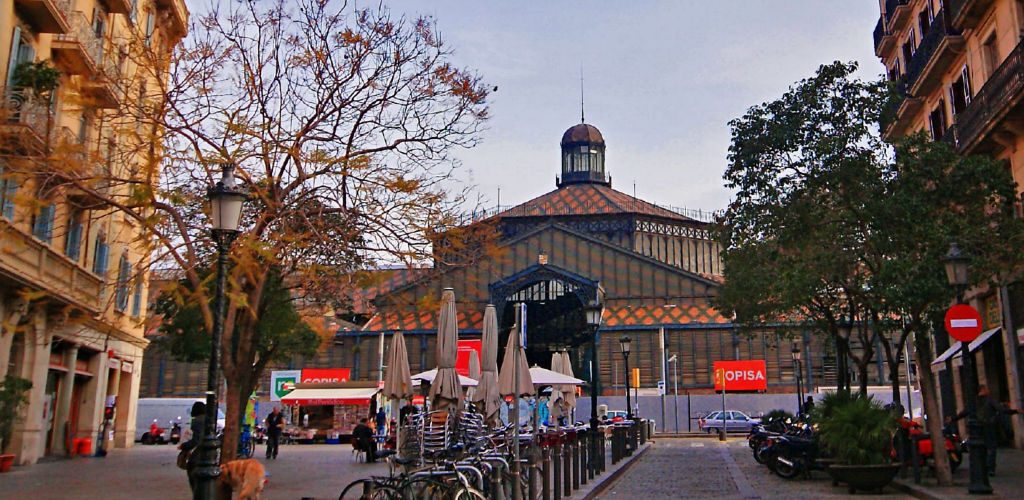
The Bestiari and the children's giants are exhibited at El Born CCM. In 2026 the official programme showed the gegantes at the Palau de la Virreina and the Bestiari and the Gegants Infantils at El Born CCM, alongside an exhibition titled "The Laias, female giants" running 7–14 February (weekdays 09:00–20:30, public holidays 10:00–20:30). Registration and hours change year to year, but exhibiting the festival's imagery in Ciutat Vella — recently including El Born CCM — has been the recurring pattern, so the exhibition is worth checking in the current programme. See our Mercat del Born guide for what El Born CCM is and when it is open.
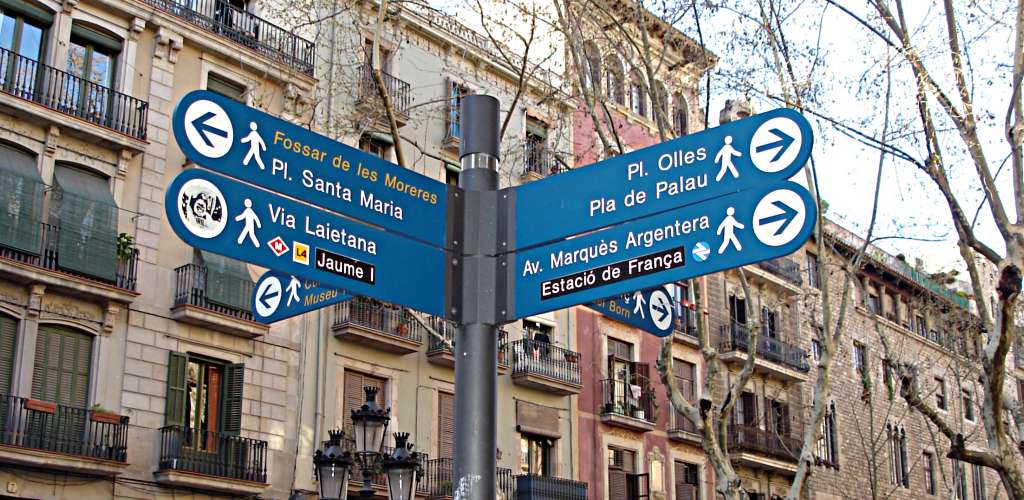
Even away from those two anchors, the seguici and the cercavila routes thread through the Gothic Quarter on the El Born side of the old city, so much of the parade passes within a few minutes' walk of the neighbourhood. The easiest base is Jaume I (L4), which puts you between El Born, the Cathedral and Plaça de Sant Jaume — see how to get to El Born for the full set of options.
Practical notes
Almost everything described here is an act in the street: you watch from the pavement, at no cost, and you can walk between venues. That makes La Laia unusually easy to fit around a trip — no tickets to book for the parades, no schedule to lock in beyond the Sunday.
Plan around the Sunday if you only have one day. The seguici at 11:00 and the diada castellera follow one another in the same quarter, so a morning in the Gothic Quarter and Plaça de Sant Jaume catches the festival at its fullest. The correfoc is the evening spectacular, later in the festival and worth staying out for — but it is loud and genuinely fiery, and the correfoc dels petits is the calmer option with children.
Bear in mind that mid-February is a working week in Barcelona, not a public holiday, so the festival runs alongside ordinary school and office days; the streets are busy but the city is not closed. The official festival site also carries a section of museum activities and free visits tied to the festival — check it rather than assuming which museums and which hours, as they change each year. For the rest of the city's programme that month, see our Barcelona and Spain events calendar for February.
Frequently asked questions
What is the Festes de Santa Eulàlia?
It is Barcelona's winter festa major, also called La Laia, held around 12 February in honour of Santa Eulàlia, the city's patron saint since the end of the 17th century. It is built from giants, castells, fire and sardanes, spread across a few days in Ciutat Vella and other city squares.
When is it in 2027?
The recurring rule is around 12 February, the feast day; 12 February 2027 falls on a Friday. The 2027 programme had not been announced at the time of writing — the operator publishes it in late January or early February. For 2026 the festival ran 12–15 February; use the official programme page for confirmed dates rather than any fixed date.
Is it free?
The street events — the parades, the diada castellera, the sardanes and the correfoc — are free to watch from the street. Some museum activities and visits that join the programme may differ; check the festival site's museum section.
Is it the same as La Mercè?
No. La Mercè is Barcelona's big September festa major, with large concerts and crowds. La Laia is the winter counterpart: same tradition of gegants, castells and fire, but smaller, more local and spread over fewer days in February.
Is it good for children?
Yes — it is family-scale, outdoors and free, and the giants and capgrossos are the main attraction. For the fire, the correfoc dels petits (children's fire run) is the gentler option; the main correfoc is loud and fiery, so keep younger children back.
Where do I go to see it?
The main venues are in Ciutat Vella: Plaça de Sant Jaume and Plaça Nova for the parades, castells and sardanes; the streets of the Gothic Quarter for the seguici and the correfoc; and Santa Maria del Mar, in El Born, for the closing of the Àliga procession. Exhibition imagery has recently been shown at El Born CCM.
Key facts at a glance
| Festival | Festes de Santa Eulàlia — "La Laia", Barcelona's winter festa major |
| Feast day | 12 February (patron saint of Barcelona since the end of the 17th century) |
| 2026 edition | 12–15 February 2026; the festival opened on Thursday 12 February |
| 2027 edition | Not announced; around 12 February (a Friday in 2027) |
| Type | Traditional street festival — giants, castells, fire and sardanes |
| Cost | Street events are free to watch |
| Main venues | Plaça de Sant Jaume, Plaça Nova, the Gothic Quarter, La Rambla |
| El Born anchors | Àliga procession ending inside Santa Maria del Mar; Bestiari and children's giants exhibited at El Born CCM |
| Programme | Official programme page · Catalan home (most current) · Cultura Popular festival page |
Sources: the Ajuntament de Barcelona's Cultura Popular festival page — Festes de Santa Eulàlia — and the city's own Santa Eulàlia site: Catalan home (most current) and programme. Details quoted are for the 2026 edition unless stated otherwise; times are the city's published times and should be confirmed in the current programme.
Related reading: El Born and Barcelona's history, the La Ribera and El Born combined guide, things to do in El Born, February events and the 2026 calendar overview.